Saturday, 25 August 2012

Apple Aperture 3 and Nikon Capture NX2

During the past year I have imported all my old photographs to Aperture 3. I had edited photographs either in Photoshop or, for Nikon Raw, Nikon Capture NX2. I was so impressed by Aperture 3 for both organisation and editing that I started to import Nikon Raws and to work on them there. However, I was struck that they seemed much flatter and darker than when imported into Capture NX2 and needed more work to produce a basic image.

On a Google search, I found others had noticed the difference, for example, this excellent website:

http://www.andymumford.co.uk/blog/archives/1278

If one uses Capture NX2 from within Aperture, the useful Nikon picture controls are lost because the Raw NEF file is not exported to NX2.

To illustrate the difference, I show below a photograph I had taken out of the back door to test a lens on my D700. I imported the raw file into Aperture 3, Capture NX2 and the Adobe Raw converter. I then had to export jpgs in order to upload the photographs shown.

Aperture - As shown at import of NEF Raw File
Nikon Capture NX2 - As shown at import of NEF Raw File
Adobe - As shown at import of NEF Raw File
Aperture plus Nikon Raw Preset from AppleAperturePresets
I also show above, the effect of the appropriate Nikon Raw preset from:

http://www.appleaperturepresets.net

Even that does not come close to the initial view of a Raw in Capture NX2.

However, I then found Catapult, a plug-in for Aperture 3 that does allow the export and re-import of the original Raw file from Aperture to Capture NX2. Although one has to remember the various 'save' steps to make sure the process works properly, Catapult works and is highly effective. All the controls of Capture NX2 are retained while the files are managed in Aperture.

Catapult can be downloaded from:

http://brushedpixel.com/catapult

The full version costs $29 and the 'lite' $9 (no batch processing with the latter).

I also have PTLens installed as an Aperture plug-in. This is an excellent piece of software that corrects lens pincushion/barrel distortion, vignetting, chromatic aberration, and perspective using the characeteristics of the lens read from the metadata (now called 'Info' in the upgraded Aperture 3).

http://epaperpress.com/ptlens/index.html

Capture NX2 will also do that, of course, but if it is not necessary to use that software, PTLens adds to the adjustments available in Aperture.

Andy Mumford (link given above) explains the pros and cons of Capture NX2 well. I have used it in both Windows and Mac. It is not so slow as it was but the user interface and method of working on an image are not intuitive. The controls — through control points and U-point technology — are highly impressive. It really does need a major upgrade though. Either that or Nikon should enable Apple and Adobe access to its Raw handling data while selling the advanced features through the Nik effects plug-ins.

If you are thinking of using Nikon Capture NX2 the User's Manual is essential and the book by Mike Hagen, Nikon Capture NX2 After the Shoot (Wiley, Indianapolis, 2009. ISBN 978-0-470-40926-8) is also very useful.

Aperture 3, along with a lot of the Apple software for the iMac, is a bargain and I can do more than 90% of what I need to do using it alone. I wonder if Aperture 4, on which the usual Apple rumours are rife, will have better initial handling of Nikon Raw files.

Finally, apart from occasional comparisons of software in some of the magazines (Advanced Photographer, for example), the whole emphasis in video editing is given to the full and highly expensive version of Photoshop and, sometimes, Lightroom. One imagines that magazines do not have to pay for their software and that the marketing department of Adobe is not backward in promoting its wares. Far better information is available from websites.

Sunday, 19 August 2012

Focal length of digiscopes compared to camera lenses


Does that mean you don’t have to fiddle about putting a camera on the telescope, then?


That was the question asked when I was showing off the capabilities of the Nikon P510 at the 35 mm camera equivalent of 1000mm. The question was also loaded in that it implied I would not need to buy a camera for digiscoping to replace the old Canon Ixus that fitted the scope awkwardly. The follow-up question — Surely that 1000 mm lens is as good as a scope isn’t it? — sent me in search of data. Evidence that useful as the 1000 mm is, it could not match the focal lengths of a telescope plus camera was needed. What is the focal length of a digiscope set-up in terms equivalent to a 35 mm full-frame camera?

I thought I could remember that the formula was the focal length of the camera lens multiplied by telescope magnification (with the focal length of the camera lens expressed in 35 mm full-frame camera equivalents). Sure enough, that is the formula given on the Swarovski website:


To determine the equivalent focal length for a digital camera compared to a 35 mm camera, you need to carry out a few calculations. Each digital camera has a 35 mm equivalent figure. For the Nikon P-6000, for example, the 35 mm equivalent figure is 28–112 mm. Since the Nikon P-6000 has a digital focal length of 6–24 mm, this results in a factor of 4.66 (28 mm divided by 6 mm). This factor or the 35mm equivalent focal length is usually stated in the camera’s user manual.
In this case, the equivalent focal length is the adjusted focal length of the digital camera multiplied by the factor 4.66. Example: The Nikon P-6000 is set to a focal length of 14 mm. 14 mm x 4.66 = 65.2 mm focal length equivalent for a 35 mm camera.
To obtain the entire 35 mm equivalent focal length from your digiscoping equipment, you need to multiply that focal length by the magnification of your scope.
Example: Your telescope is set at 20x magnification. 65.2 mm x 20 = 1,304 mm total 35 mm equivalent focal length
To determine the total digital focal length of your digiscoping equipment, you simply need to multiply the focal length of your digital camera by the magnification settings of your telescope.
Example: Your digital camera is set to 14 mm focal length; the telescope is at 20x magnification: 14 mm x 20 = 280 mm total digital focal length

So I thought I would try it out in practice, because as, we shall see below, this is not the only formula doing the rounds on the internet. The old Ixus is ‘on loan’ and I had to use the only camera in the house that was vaguely suitable — my wife’s underwater Panasonic Lumix DMC-FT3 with its square lens housing. I managed to hold this to the eyepiece and zoom in until there was a full frame without vignetting. I then looked at the metadata. The camera focal length was 7 mm. The factor needed to convert to 35 mm equivalent was calculated from the actual zoom range of 4.9-22.8 mm and the stated 35 mm equivalent of 28-128 mm. 28/4.9 is 5.71 and 128/22.8 is 5.61 so I took the mean of 5.66. The telescope magnification was 40. Therefore, the 35 mm equivalent focal length of the whole set-up was 5.66 x 7 x 40 = 1584 mm.

The story does not end there because the Google search showed other sites which showed calculations for focal length. In the first (http://www.birddigiscoper.com/2009/08/digiscoping-math.html), I could not see how the writer had derived the formula or the constants used. Putting the same values into his formula I came up with a focal length of 2263 mm! Another website (http://www.digibird.com/primerdir/primer0.htm) provides an Excel spreadsheet which came up with 1720 mm. In the latter case, the difference is in the way the 35 mm equivalent focal length of the camera lens is calculated but since I do not know how a constant used for the calculation was derived I cannot comment further.  These cases demonstrate how dangerous the internet is for spreading and retaining incorrect information. I have shown the web addresses but not shown them as links for this reason.

Just in case you are wondering whether Swarovski got it wrong and the other guy is right (even though I could find no basis for the formula he came up with), I did stand in the same place with my Nikon P510 and take a picture at 1000 mm equivalent of the same object at the bottom of the garden. I then measured the size of the object in relation to the width of the frame on the screen. In my crude Lumix digiscoped shot, the object occupied 0.58 of the total width; in the Nikon it occupied 0.36 of the width. Dividing one by the other, 0.58/0.36 = 1.61. Thus, the focal length of the digiscope was 1.61 times that of the Nikon or 1610 mm, remarkably close to the calculated 1584 mm given the crudity of the size measurements. Clearly, the formula given by Swarovski is the one to use when calculating the focal length of a digiscope set-up when using a digital compact camera. I just hope that people find that one first in any Google search.

The focal length of any digiscope set-up can be calculated from the camera focal length (found in the metadata after taking), the manufacturer’s stated zoom range in 35 mm equivalents and the magnification of the telescope eyepiece.

And, just in case you were wondering, great as the 1000 mm equivalent lens of the Nikon P510 is for birds, it does not replace the digiscope entirely. Much longer focal lengths can be achieved with the latter but whether there is enough light or time to set up the scope is another matter.


Friday, 17 August 2012

Eyepieces of course

The original version of the previous post refered to 'objectives' instead of 'eyepieces' Thanks to a contributor to Birdforum for pointing out the obvious error. I have only two excuses: 1. I had been working on a consultancy project involving different microscope objectives and must have had objectives on the brain when I was writing about eyepieces for telescopes; 2. Is age catching up with me?  The post, including the diagram, has now been corrected.

Saturday, 11 August 2012

Which Eyepiece for Leica apo-Televid 77?


I carry three eyepieces with me when using the apo-Televid 77. Why?

Over the years we have had the opportunity of testing all the eyepieces made for the 77/62 range side by side and under different lighting conditions. The eyepiece lenses (available only on the secondhand market) are:

20x WW (41009)
32x WW (41011)
40x (41003)
40x WW (41007)
30-60x Zoom (41005)

Let’s start by considering the zoom.

The 20-60x zoom eyepiece (41005) is one I do not use. It has an angle of view of 1.9-1.2˚ equating to a 34-20 metre field of view at 1000 metres. At 20x magnification, its exit pupil is 3.85 mm (making it brighter, on paper, than the 20x WW) decreasing to 1.28 at 60x. There are several reasons why I do not favour this eyepiece. It has a narrow field of view compared to the WW series. It is pretty useless at magnifications above 40x under normal lighting conditions and it lacks the clarity and brightness of the single magnification eyepieces, despite the relatively large exit pupil. Having a family with two apo-Televid 77s, an apo-Televid 82 and an apo-Televid 62, the general comment is that Leica did not get the zoom right until the 82.

The other eyepiece we do not use is the 40x (41003) — the early, non-wide variety. It has a relatively narrow angle of view (1.25°; 22 metres field at 1000 metres) and a small exit pupil of 1.25 mm. The WW version is far superior.

In terms of Field of View the WW lenses are far superior as the diagram below shows.


Now to the eyepieces I carry with me:

I usually have the 40x WW (41007) fitted. It has a 1.8° angle of view (32 metres field at 1000 metres) and an exit pupil of 1.8 mm. It is a superb lens. But if the light is relatively low or a wider field is needed, then I can quickly switch to the 32x WW (41011) (2.3° angle of view — 40 metres field at 1000 metres; 2.3 mm exit pupil). Another superb lens. If the light really starts to fade or if I want to scan and count then the 20x WW (41009) comes into its own. This gives a 3.45° angle of view (60 metre field at 1000 metres) with an exit pupil of 3.45 mm.


40x WW fitted on the Apo-Televid 77

The value of carrying three eyepieces was illustrated by an evening in the Eric Morecambe  Hide at the RSPB’s Leighton Moss reserve. A flock of Black-tailed Godwits looked superb with the 40x WW but as the light began to fade, the 32x WW was needed. As the colours began to become indistinct, a quick change to the 20x WW brought the scene back to life.


The three WW eyepieces I carry

A factor in choosing eyepieces is digiscoping. It is worth noting that the Leica Digital Adapter 2 (42303) nor the Digilux 1 Adapter (42302) will not fit either of the 40x eyepieces. The diameter of the various eyepieces for fitting digiscoping collars are: 54 mm (32x WW); 53 mm (20x WW and 20-60x); 50 mm (40x WW); 45 mm (40x). It is worth talking to SRB Griturn about digiscoping adapters for all these eyepieces.

SRB Griturn can be found at: http://www.srb-griturn.com


Leica Digital Adapter 2 (42303) fitted to 32x WW eyepiece

Finally, these eyepieces were also made for the Televid 62 but have lower magnifications (by a factor 0f 0.8). 40x becomes 32x, and 32x becomes 26x on the Televid 62.


Monday, 23 July 2012

Photographic Magazines


Editors of UK photographic magazines have a hard time. Publishers want and need maximum sales and that means catering for as large a market as possible. The mass market, sadly, has the attention span of a gnat, the educational achievements of a 1950s ten-year old and the intelligence of a a less than bright lowland gorilla. Editors who have tried to raise the standards have been pushed out of the way over the years as publishers have made it clear that only the volume of sales count for their survival and their advertisers’ profits.
I picked up a copy of Practical Photography. This once very good magazine was pushed downmarket a number of years ago. Quite clearly, it is firmly entrenched there. Amateur Photographer still tries to achieve a balance, sometimes successfully but often not. It has the added difficulty of being a weekly publication. I thought that Digital Photographer was trying hard and in the right direction for a while but has recently gone downhill.
One Editor who, wherever he has been, has tried to raise the standard is William Cheung. His Advanced Photographer started very well and I now subscribe to the digital version. Recently there has been — for me — an overemphasis on studio lighting with photon-by-photon accounts of set-ups for portraiture. Time will tell if this one can keep up its early high standard.
I occasionally buy a copy of British Journal of Photography to see what angle ‘professional’ photographers are taking on what it considers good work and good equipment. However, and cutting beneath the arty-farty self-reverential tone, only a few features justify an occasional purchase.

Sunday, 15 July 2012

Nikon P510 - First Trial

I succumbed to a Nikon P510 for one reason - the 1000 mm, 35 mm equivalent. lens. For wildlife photography, mainly video that I take using a Sony HDR-XR550, the longest lens I can manage is 600 mm equivalent and that is with the 1.7x extender. But with the need for speed it is usually impossible to set up a tripod in time to get a shot of a bird that may only be there for a few seconds, so the video is shaky even with vibration reduction, and the subject is tiny even with that length of lens. That's where a still is useful to drop in the video (with the appropriate sound effect of a camera shutter). However, the still capabilities of the Sony are limited (it seems to focus on anything but what you want it to focus on in still mode although it manages more than capably to get it right in video) and 600 mm is still the maximum.  Hence the Nikon P510 (which also has high-definition video). I know it does not do raw, I know its small sensor will be noisy if the gain (ASA setting) is increased very much. But that 1000 mm lens for £304 from Amazon could not be resisted.

I tried the camera immediately I had opened a box and fitted a memory card (the battery came ready charged). I stood outside and photographed the birds on the feeder and on the lawn, tried a few close-ups of flowers (another useful source of cut-aways for travel videos) and downloaded the results into Aperture on my Mac, did the quick fix adjustment and cropped to 16:9 format to simulate what I would get if they were added to a video.

Here are three of the shots:

Bullfinch with sunflower seed. 1/125, f5.9, 180mm (1000 mm equiv), 400 ASA. Hand-held. Cropped to 2547x1431 pixels

Chaffinch. 1/250, f5.9, 180mm (1000 mm equiv), 800 ASA. Hand-held. Cropped to 3022x1698 pixels

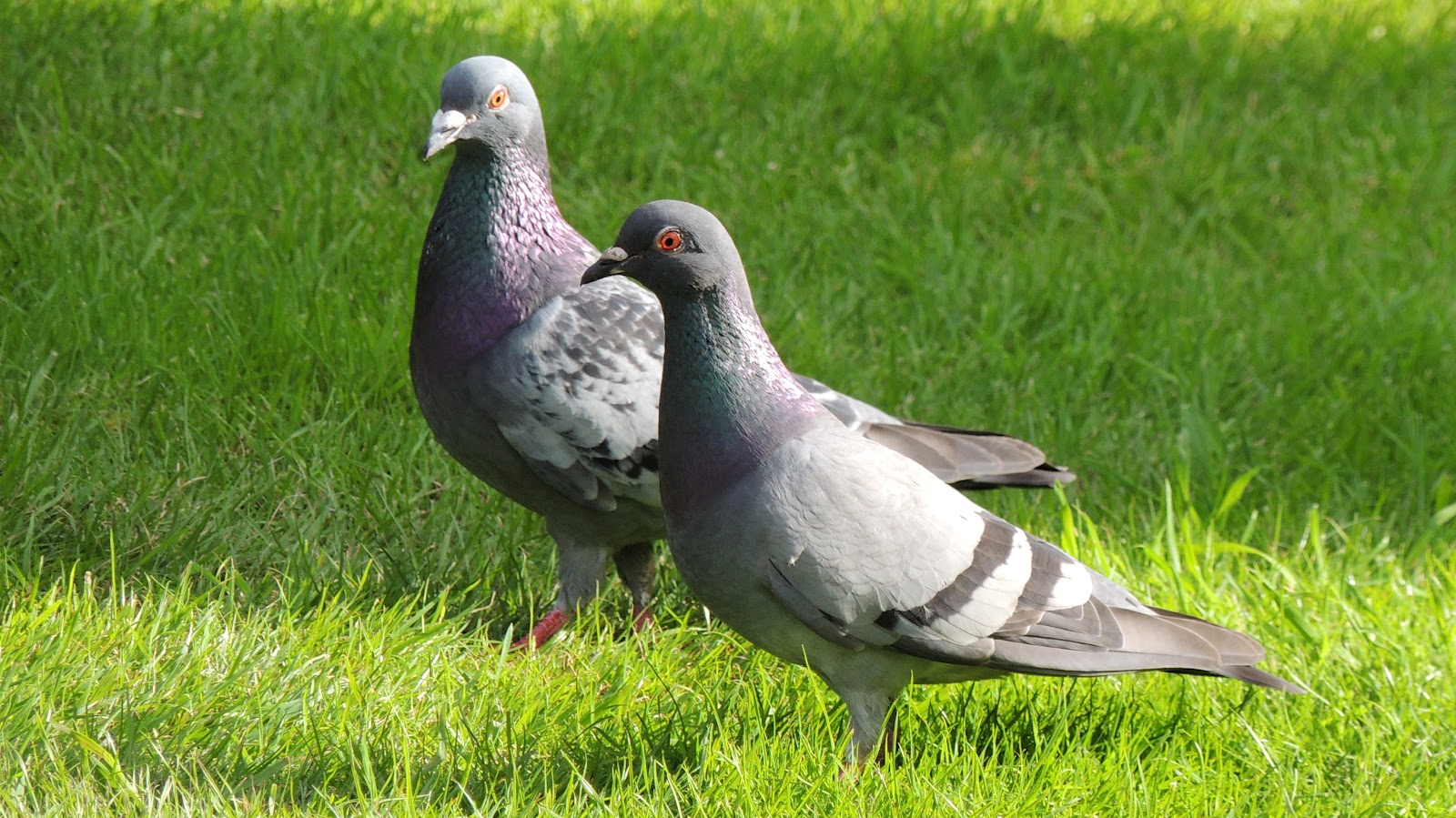
Feral pigeons. 1/250, f4.9, 98mm (545 mm equiv), 160 ASA. Hand-held. Cropped to 3768x2118 pixels

Pretty impressive - and just what I needed.

I cannot stress how important it is to have something that is light on long journeys in the tropics, and this certainly fills the bill. Of course, it will not replace by Nikon D700 and it is not meant to but so far it looks ideal for the job I wanted it for.

There was only one problem — my wife did not believe it could have been so cheap and so the Amazon invoice was dangled under her nose. The value is actually amazing. Based on retail price index, the price is the same as I paid in 1956 for a Braun Paxina 29 still camera. That was a 6x6 120 roll-film camera with a not very good f2.9 lens and an eight-speed shutter. That was it — no rangefinder, no meter, just three controls to operate (aperture, speed and focus) plus not forgetting to wind on. Based on the rise in wages compared to prices since then, I would only just been out of the box camera price range. I can forgive the plasticky feel of the P510 at its price.

I have now downloaded the manual and will report further.

Tuesday, 3 July 2012

Exakta on eBay


A couple of recent eBay auctions had Exakta bodies and lenses I would once have given my eye teeth for. A Varex IIb with four lenses: Flektogon 35 mm f2.8; Pancolor 50 mm f2; Sonnar 135 mm f4; Schneider-Kreuznach Tele Xenar 200 mm f5.5 plus a set of extension tubes. That lot went for £172.75.
A few days later a Varex went with an Enna Lithagon 35 mm f3.5, a Zeiss Jena 58 mm f1.2 (no name given), a Meyer Trioplan 199 mm f2.8 and a Dallmeyer 6” f5.6 plus a few odds and ends for £139.00.
I wonder whether bidders wanted the lenses for digital cameras, to use with the bodies or as collectors items.
I had an Exakta Varex IIb with f2 Pancolor, pentaprism, extension tubes and the release rod that went with them. I could only afford a cheap 135 mm lens which was unbelievably soft. I made the wrong choice though. The Pentax VX or Spotmatic would have been better. I chose a system that was on its way out in 1966; Pentax was on the way in.
The machining of the extension tubes was pretty crude with sharp edges on the locking levers. Setting up the external linkage between the diaphragm of the lens at the front and the body release at the back was a pain. The tightness of fit of the rings was poor such that when I had a lens on the end it drooped at an alarming angle. Some features of the Varex IIB were useful (the knife for cutting a partly-exposed film - but not for Kodachrome and the like, the left-hand release for a left-hander) but the Pancolor lens I had seemed to lack contrast compared with Japanese lenses of the time and I was not sorry to sell the camera lens and close-up accessories to Campkins in Cambridge.